


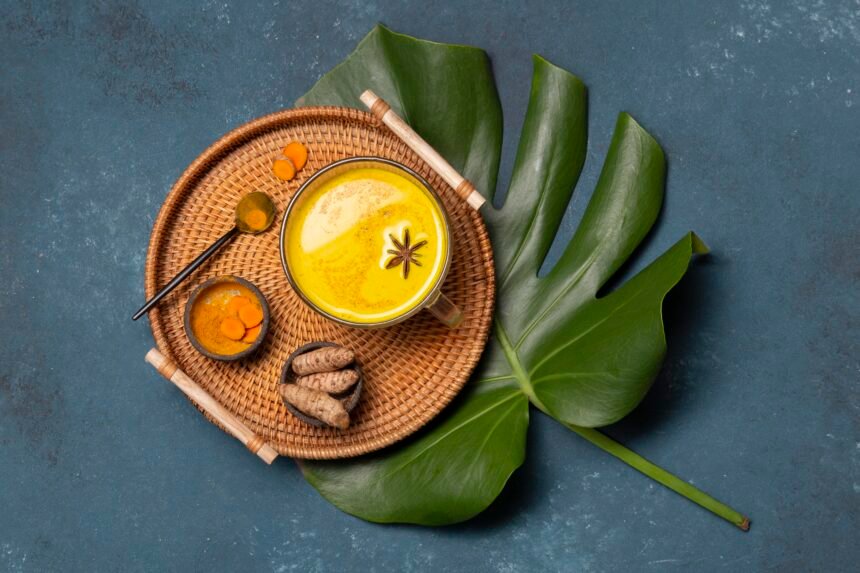
Ayurveda places great importance on Ghrita (medicated ghee) as both a therapeutic medicine and a rejuvenating agent. Ghrita is considered one of the best carriers (Yogavahi) for herbal medicines, as it enhances absorption and delivers the medicinal properties deep into body tissues. Due to its nourishing and balancing nature, Ghrita is widely used in treating neurological, digestive, reproductive, and chronic disorders.
What Is Ghrita in Ayurveda?
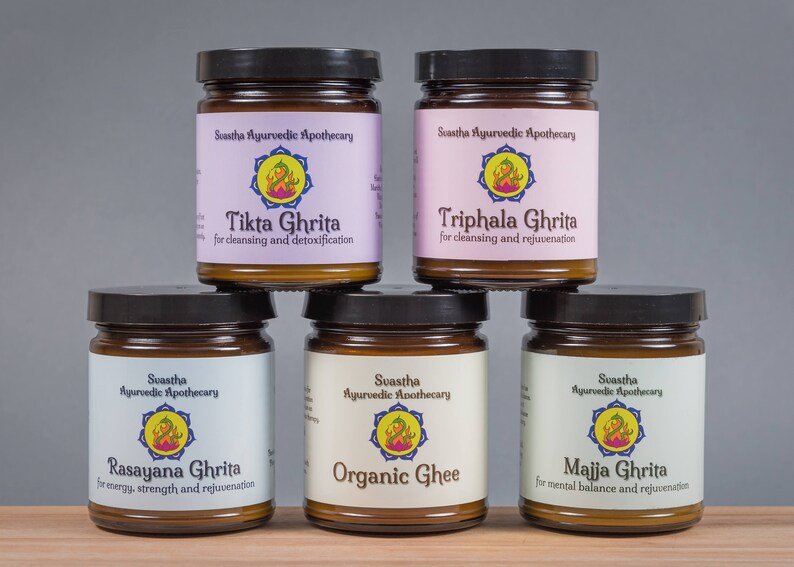
Ghrita is an Ayurvedic formulation prepared by processing cow’s ghee with herbal decoctions (Kwatha) and herbal pastes (Kalka) through a specific heating process.
- Semi-solid, ghee-based formulation
- Highly nourishing and strengthening
- Enhances memory and immunity
- Suitable for long-term use
- Acts as a powerful carrier of herbs
Importance of Ghrita in Classical Ayurvedic Texts
Ghrita is extensively praised in classical texts such as:
- Charaka Samhita
- Ashtanga Hridaya
- Sushruta Samhita
How Ghrita Is Prepared (Traditional Method)
The preparation of Ghrita follows the classical Sneha Paka process:
- Preparation of herbal decoction (Kwatha)
- Preparation of herbal paste (Kalka)
- Mixing cow ghee, Kwatha, and Kalka
- Slow heating on mild fire
- Continuous stirring until Sneha Siddhi Lakshana (completion signs) appear
- Filtration and storage
Common Types of Ghrita & Their Uses
1. Brahmi Ghrita
- Improves memory and concentration
- Useful in anxiety, insomnia, and epilepsy
2. Triphala Ghrita
- Supports eye health
- Improves digestion and detoxification
3. Mahatikta Ghrita
- Useful in skin disorders
- Helps in detoxification and inflammation
4. Phala Ghrita
- Supports female fertility
- Strengthens reproductive health
5. Kalyanaka Ghrita
- Enhances mental health
- Useful in depression and stress
Health Benefits of Ghrita
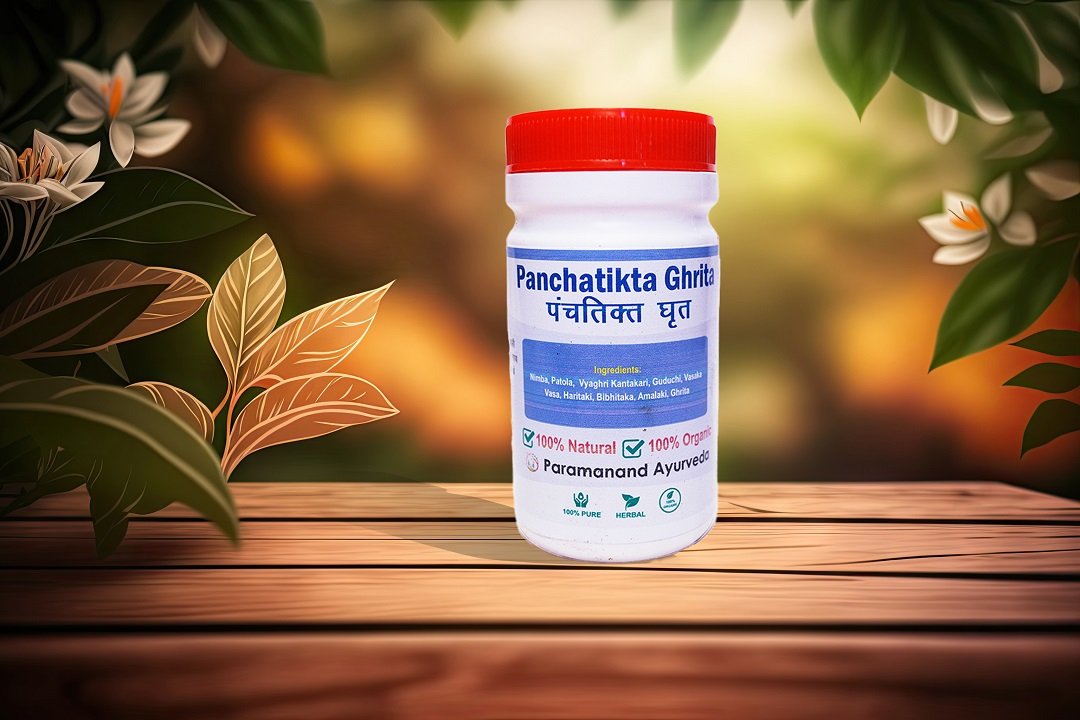
Enhances Brain & Nervous System Health
Ghrita nourishes nerve tissues and improves cognitive functions.
Improves Digestion & Metabolism
Stimulates digestive fire (Agni) without aggravating Pitta.
Nourishes Body Tissues
Promotes healthy development of all Dhatus.
Supports Reproductive Health
Beneficial for fertility and hormonal balance.
Detoxifies & Rejuvenates
Acts as a Rasayana, slowing aging and enhancing vitality.
Dosage & Method of Consumption
- General dosage: 5–15 grams daily
- Taken with warm milk, lukewarm water, or food
- Best consumed in the morning or as advised by an Ayurvedic physician
External Uses of Ghrita
Apart from internal use, Ghrita is also applied externally:
- For wound healing
- As eye drops (Netra Tarpana)
- For nasal therapy (Nasya)
- For skin nourishment and burns
Precautions & Side Effects
- Avoid in indigestion and acute fever
- Use cautiously in obesity and high cholesterol
- Not recommended during severe Ama (toxins) condition
- Always consult an Ayurvedic doctor for long-term use
Difference Between Ghrita and Other Sneha Formulations
| Formulation | Base | Best For | Nature |
|---|---|---|---|
| Ghrita | Ghee | Brain, nerves, digestion | Cooling & nourishing |
| Taila | Oil | Muscles, joints | Warming |
| Avaleha | Semi-solid | Strength & immunity | Nourishing |
| Churna | Powder | Short-term therapy | Dry |
Why Ghrita Is Highly Valued in Modern Ayurveda
- Excellent bioavailability
- Crosses blood-brain barrier
- Suitable for internal and external use
- Ideal for chronic and degenerative diseases
Conclusion
Ghrita Ayurvedic medicines are among the most powerful and versatile formulations in Ayurveda. Their unique ability to nourish, rejuvenate, and deliver herbal benefits deep into the body makes them indispensable in both preventive and therapeutic care. When used under proper guidance, Ghrita can significantly enhance physical strength, mental clarity, and overall well-being.