



Ayurveda places great importance on Taila (medicated oils) for both internal and external therapeutic applications. Taila formulations are especially effective in Vata disorders, musculoskeletal conditions, skin diseases, and neurological problems. Due to their deep-penetrating and nourishing nature, Taila medicines are widely used in daily wellness routines and Panchakarma therapies.
What Is Taila in Ayurveda?
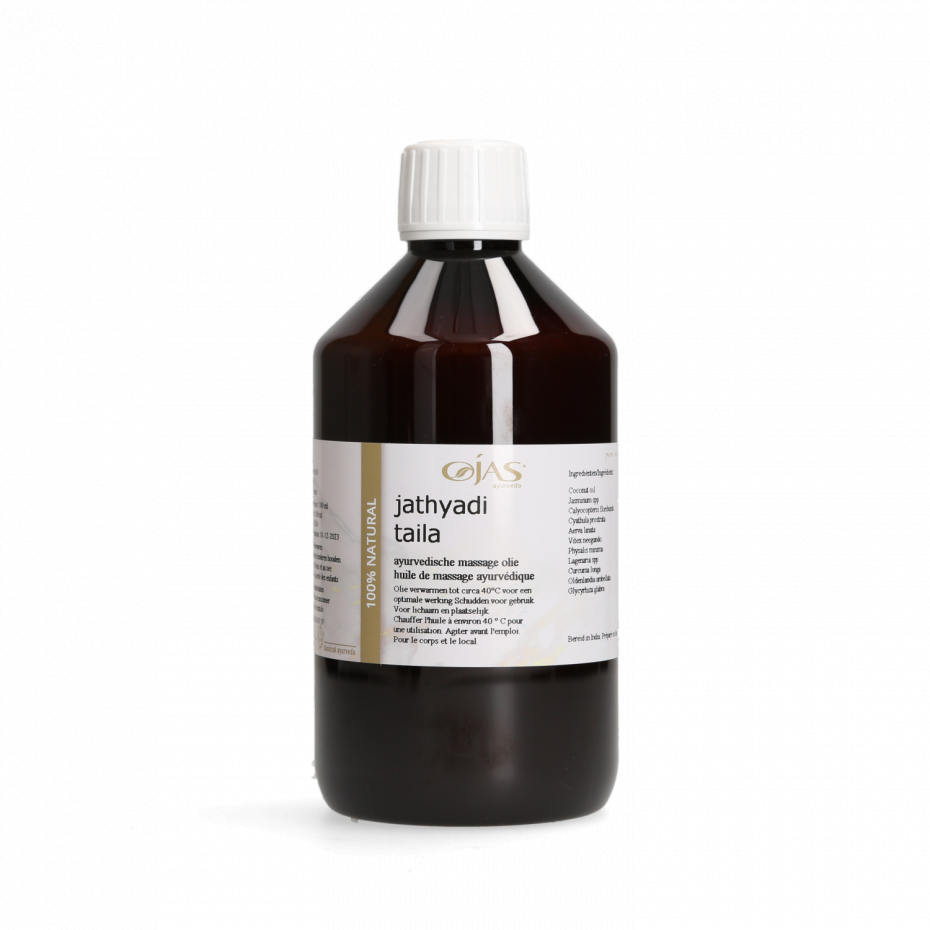
Taila is an Ayurvedic formulation prepared by processing herbal decoctions (Kwatha) and herbal pastes (Kalka) with a base oil, commonly sesame oil, through a classical method called Sneha Paka.
- Oil-based formulation
- Deep tissue penetration
- Long shelf life
- Suitable for external and internal use
- Especially effective for Vata imbalance
Importance of Taila in Classical Ayurvedic Texts
Taila is extensively mentioned in:
- Charaka Samhita
- Sushruta Samhita
- Ashtanga Hridaya
How Taila Is Prepared (Traditional Method)
The preparation of Taila follows the classical Sneha Kalpana process:
- Preparation of herbal decoction (Kwatha)
- Preparation of herbal paste (Kalka)
- Mixing base oil, Kwatha, and Kalka
- Slow heating on mild fire
- Continuous stirring until Sneha Siddhi Lakshana appear
- Filtration and storage
Common Types of Taila & Their Uses
1. Mahanarayana Taila
- Relieves joint and muscle pain
- Useful in arthritis and stiffness
2. Ksheerabala Taila
- Strengthens nerves
- Useful in paralysis and neuropathy
3. Bhringaraja Taila
- Promotes hair growth
- Prevents premature greying
4. Dhanwantaram Taila
- Used in Panchakarma therapies
- Beneficial in postnatal care
5. Nalpamaradi Taila
- Improves skin tone
- Useful in pigmentation and tanning
Health Benefits of Taila
Relieves Vata Disorders
Helps reduce dryness, stiffness, and pain.
Nourishes Muscles & Joints
Improves flexibility and strength.
Enhances Skin & Hair Health
Moisturizes skin and strengthens hair roots.
Improves Circulation
Regular massage enhances blood flow and detoxification.
Supports Nervous System
Calms nerves and improves neuromuscular coordination.
External & Internal Uses of Taila
External Uses
- Abhyanga (oil massage)
- Shirodhara
- Nasya (nasal drops)
- Basti (medicated enema)
Internal Uses
- Used in small doses under medical supervision
- Helpful in chronic Vata disorders
Dosage & Application
- External use: Apply lukewarm oil and massage gently
- Internal use: 5–15 ml only under physician guidance
- Frequency depends on condition and therapy
Precautions & Side Effects
- Avoid use during acute fever and indigestion
- Not recommended in Kapha-dominant conditions without advice
- Patch test recommended before skin application
- Store away from heat and sunlight
Difference Between Taila and Ghrita
| Feature | Taila | Ghrita |
|---|---|---|
| Base | Oil | Ghee |
| Best For | Vata disorders | Pitta & Vata |
| Absorption | External & deep | Internal & brain |
| Texture | Light to heavy | Semi-solid |
Why Taila Is Essential in Modern Ayurveda
- Effective for lifestyle-related joint disorders
- Natural alternative to pain-relief therapies
- Integral part of Panchakarma treatments
- Suitable for preventive and therapeutic care
Conclusion
Taila Ayurvedic medicines are powerful, time-tested formulations that offer deep nourishment, pain relief, and healing. Their ability to penetrate tissues and balance Vata dosha makes them indispensable in Ayurvedic therapy. When used correctly under professional guidance, Taila can significantly improve musculoskeletal health, skin quality, and overall well-being.